
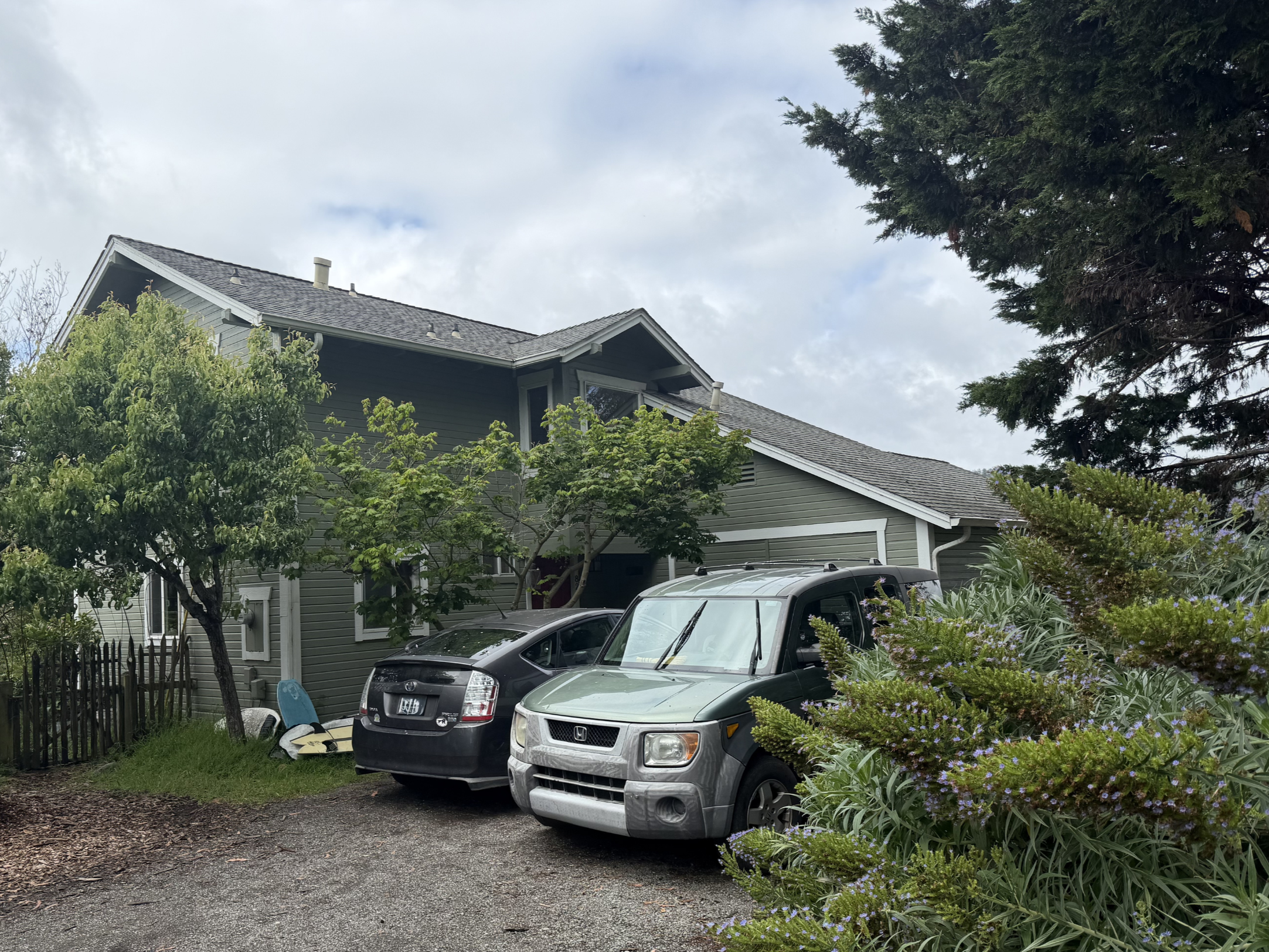
The donated A St property.
West Marin is a place people love deeply — but that love comes at a cost. Over the past few decades, the same qualities that draw people to Point Reyes Station, Inverness, Stinson Beach, and the surrounding communities have made these places increasingly unaffordable to the people who actually live and work here. As property values have climbed far beyond what local wages can support, longtime residents and working families have too often been pushed out.
The community land trust model exists precisely to interrupt that pattern. By permanently removing properties from the speculative market and capping what a home can sell for, organizations like CLAM can ensure that homes remain affordable not just for the next tenant, but for generations to come. The challenge with this idea, as with so much in affordable housing, is supply: acquiring properties in a place where they cost as much as anywhere in California.
That's where community members like Christa Burgoyne offer a bright light.
Christa has been part of CLAM's story almost from the very beginning. She joined within the organization's first year, served on the fundraising committee for two decades, and watched West Marin's transformation up close. This spring, she donated her residential property on A Street in Point Reyes Station — appraised at $1,125,000 — to CLAM, ensuring it will remain a permanent, affordable community asset for generations to come.
Rooted in a Belief About Community
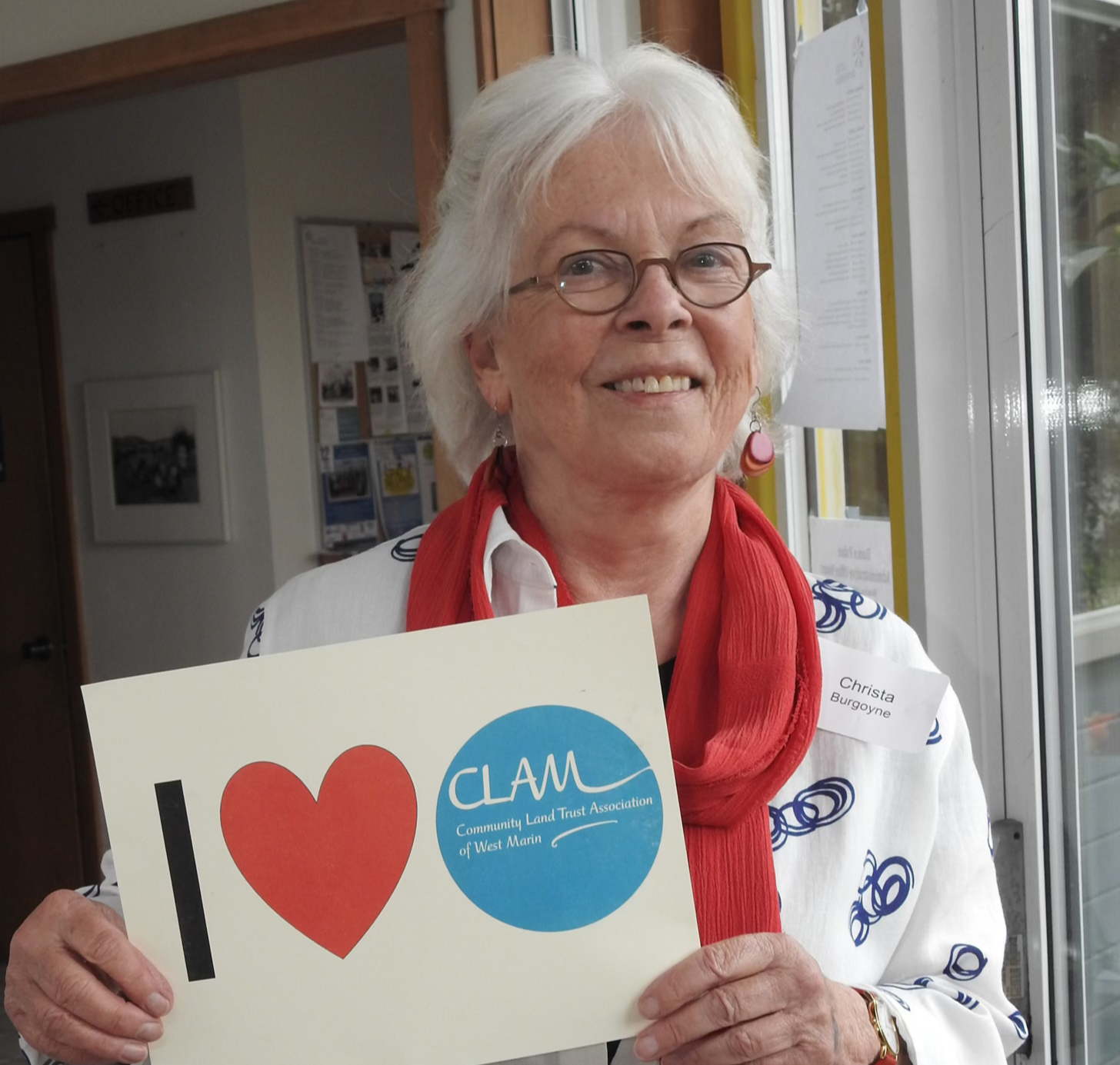
Christa spent her career as a social worker, and that background shapes the way she thinks about housing and about what a healthy community actually requires. Long before the affordability crisis became a headline issue, she was watching the pressures build in real time.
"Point Reyes Station has changed a lot," she reflects. "I used to hike in Marin County when I was young. The national park hadn’t existed. After [Point Reyes National Seashore] became a park, it became more of a tourist destination. Housing became more and more expensive — drastically expensive. And people were having a really hard time living locally." As tourism grew and outside interest in West Marin intensified, the working people who had always anchored the community found themselves being pushed out — not all at once, but steadily, year by year.
"My feeling always was that people would be so much happier if they could work where they live," she says. "The community would benefit, because the people would stay — instead of leaving at 5 pm. They would contribute to the community because it was theirs, rather than just a place where they worked."
That conviction is what drew Christa to CLAM when the organization was still finding its footing, and it is what has kept her connected ever since.
For Christa, part of what makes CLAM's approach so compelling is its durability. Under the community land trust model, CLAM retains ownership of the land while residents own or rent the home on it.
"When they sell a house, they keep the land," Christa explains. "Therefore it is much more affordable for a local couple or family... it stays affordable in perpetuity." She has seen this play out across multiple properties over the years, and her confidence in the model is deep. "It is a solution we need much more of."
The current tenants at the A Street property, Maggie and Luke, will remain in their home under CLAM's ownership — their housing security intact and their lives undisrupted by the transition. The donation also includes an option for them to be first in line should they wish to purchase the home when the time is right. If and when they purchase, the property will be deed-restricted and sold with a ground lease, keeping it in the affordable market long after their ownership.
For Christa, that kind of continuity — a real family staying in their home, with a real future within reach — is precisely the point. "People tell me all the time how grateful they are that CLAM is there," she says. "It is really necessary. The community would be very different without it."
An Invitation to Others
Christa is sharing her story publicly with a hope that other local property owners will see what's possible and consider a similar path. She is careful to recognize that it may not be the right choice for everyone. But for those who do have the ability, she describes the experience as “enormously gratifying," she says. "It is contributing quality to a community that they obviously cherish or they wouldn't have a property here."
As a longtime CLAM member, Christa also values the benefits of membership and of being a consistent contributor to CLAM’s mission. “You feel much closer to the community when you are actually a part of it.” Being a member of CLAM means supporting CLAM’s work. “It’ll make the community healthier if everybody who works here can also live here.”
With nearly three decades of involvement with CLAM behind her, Christa is still thinking about the future — and about who gets to be part of it. "We want a healthy community," she says. "Diverse. Not just wealthy people, but people who can live where they work."
CLAM is grateful beyond measure for Christa’s vision, her loyalty, and this extraordinary support.
To learn more about supporting CLAM or exploring a property donation, contact our CLAM offices.
